What Makes a Short Keep People Watching: Hooks, Captions, B-roll, and Pacing
Why some shorts get watched to the end and others get swiped in a second. A practical guide to audience retention for YouTube Shorts, TikTok, and Reels, built around talking videos.
· 6 min read
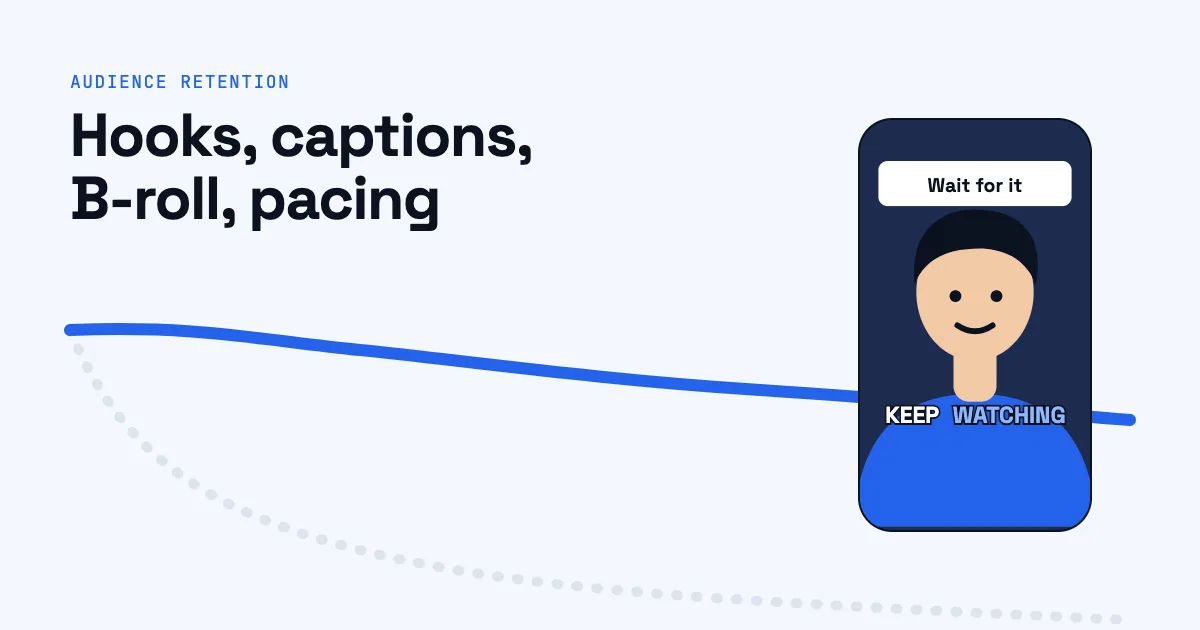
Every short-form feed works the same way: it shows your video to a few people, watches what they do, and shows it to more people if they stay. On YouTube Shorts, TikTok, and Instagram Reels, the signal that matters most is simple to state and hard to earn: do people keep watching?
This guide breaks down what keeps viewers on a short, with a focus on the hardest kind to make gripping: a person talking to the camera. No dancing, no jump-scare thumbnails, just someone with something worth saying. Done right, that's one of the strongest formats in the feed.
Retention is decided in three moments
It helps to think of a short as three moments where a viewer decides to leave or stay:
- The first second or two, when they decide whether this is for them.
- The middle, when they decide whether it's still worth their time.
- The end, when they decide whether to rewatch, comment, follow, or share.
Each moment has its own tools: a hook for the first, pacing and visual change for the middle, and a real payoff for the end.
1. The hook: earn the first two seconds
The viewer didn't choose your video; the feed did. So the opening has to answer, instantly, "why should I care?"
Start on the strongest line. If you're cutting a short from a longer talk, don't start where the speaker started. Start where the idea becomes interesting. "So I've been thinking a lot about pricing, and…" loses people. "You're charging too little, and here's how I know" doesn't.
Put a hook on screen. A line of text in the first frames tells silent scrollers what they're about to get. Good hook text is:
- Specific. "The pricing mistake that cost us $40k" beats "Pricing tips".
- Drawn from the clip. It should promise exactly what the speaker delivers, not more.
- Short. Readable in under two seconds, roughly ten words or fewer.
Avoid slow openings. Logos, intros, "hey guys", and long establishing shots all spend the most valuable two seconds on nothing.
2. Captions: make every word readable
A large share of people scroll with the sound off, at least some of the time. Even with sound, captions help viewers follow a fast speaker, an accent, or a noisy room. But captions for shorts are different from subtitles for films.
Show a few words at a time. Two to four words per line, in a bold, heavy font, large enough to read on a small phone at arm's length.
Light up each word as it's said. Highlighting the current word pulls the viewer's eye along with the voice. That rhythm is part of why captioned shorts feel faster even when the speaker isn't.
Set apart the key word. In each idea there's one word that carries the meaning: a number, a name, a strong verb. Give it a second color. Viewers skim, and the highlighted word is what they'll remember.
Respect the safe zone. Platforms cover the bottom and right side of a short with buttons, the account name, and the post's text. Captions placed there get hidden. Keep them in the middle of the frame, roughly between the speaker's chin and the lower third.
3. Pacing: cut the air out
Speech is full of pauses, restarts, and filler words. In a long video that feels natural; in a short it feels slow.
- Trim the silences between sentences down to a beat.
- Cut false starts. "We, so we went, we went to…" becomes "We went to…"
- Keep one idea per short. If the clip needs a second idea to make sense, it's probably two shorts, or the wrong clip.
Tight pacing is the cheapest retention boost there is. It costs nothing but attention to detail, and with a word-timed transcript you can cut on exact word boundaries instead of guessing on a waveform.
4. Visual change: give the eye somewhere to go
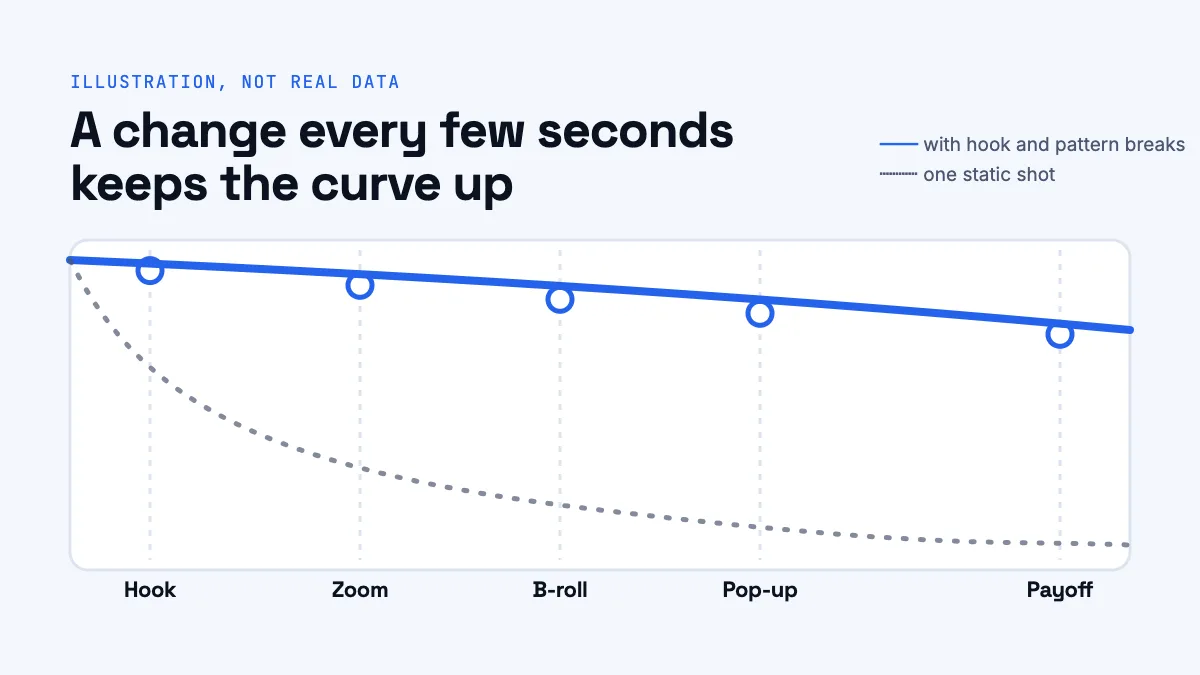
Holding one static shot of a face for 45 seconds is hard, even if what's being said is great. Small, frequent changes keep the picture alive. In practice that means a pattern break every few seconds:
- Jump zooms. Punch in slightly on a new sentence, then out on the next. It reads as a second camera angle.
- B-roll on what's said. When the speaker mentions something you can show (a city, a product, a stack of money, a crowd), cut to a short clip of it while their voice continues. Make sure the clip actually matches what's said; a random stock clip is worse than staying on the face.
- Pop-ups. A number or key phrase pops up on screen as it's spoken: "$40k", "3 steps", "8 months".
- Reframing. On a two-person conversation, switching between the speaker and the listener's reaction adds energy.
The rule: every visual change should help the viewer understand or feel what's being said. Effects for their own sake feel cheap.
5. Sound: music under, never over
A quiet music bed makes a talking short feel finished and fills the gaps you trimmed. Two rules keep it from hurting:
- Duck it under the voice. The music should drop whenever someone speaks and rise slightly in pauses. If viewers have to strain to hear the words, they leave.
- Match the loudness the platforms expect. A short that's much quieter than the one before it gets swiped. One that's much louder gets turned down. Mix to a consistent level.
Light sound effects (a soft whoosh on a cut, a pop on a pop-up) can add polish, but use them sparingly.
6. The payoff: end where the thought lands
The end of a short is where you earn the rewatch and the follow. Two things matter:
- Deliver what the hook promised. If the hook says "the pricing mistake", the clip must name the mistake. Viewers who feel tricked don't follow.
- End on the line, not after it. Cut right after the strongest last sentence. Trailing "yeah, so, anyway" kills the ending. Some creators end on a line that loops neatly back into the first second, which encourages rewatches.
7. Length: as long as the idea, no longer
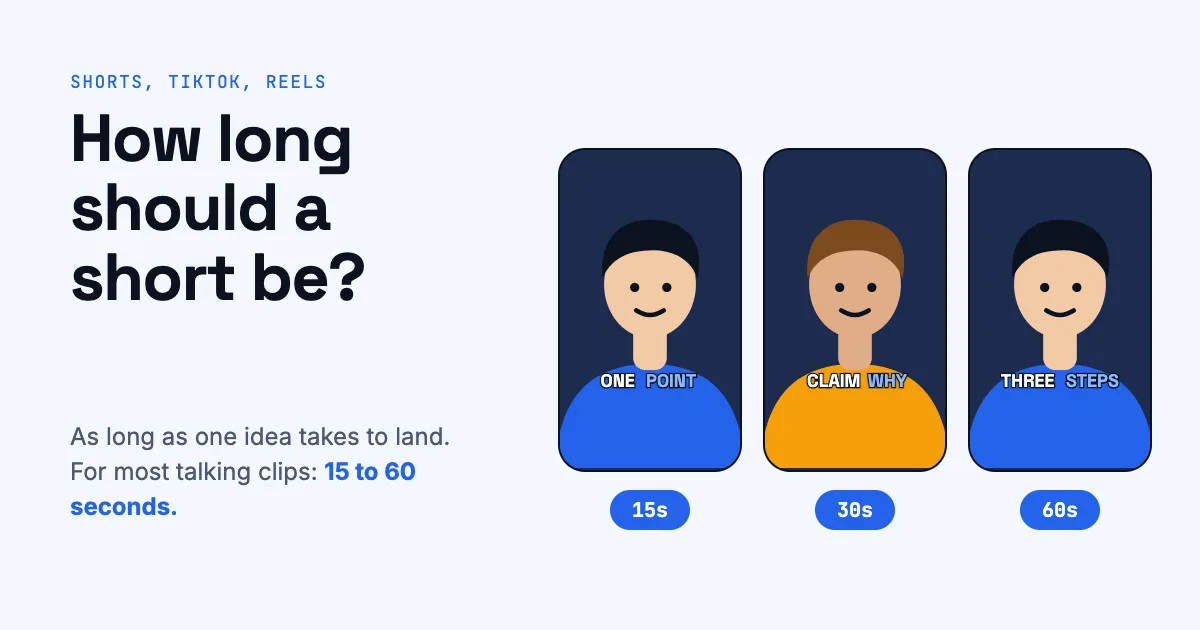
There's no magic number. A short should be as long as one complete idea takes to land, which for most talking clips is 15 to 60 seconds. We go into more detail, platform by platform, in How long should a short be?.
A checklist before you post
- Does the first line hook on its own, with the sound off?
- Is there hook text on screen in the first two seconds?
- Can every word be read on a phone, and are captions clear of the app's buttons?
- Are the pauses and false starts gone?
- Is there a visual change every few seconds, and does each one match what's said?
- Is the music clearly under the voice?
- Does the clip pay off the hook and end on its strongest line?
How Postmotion builds this into every short
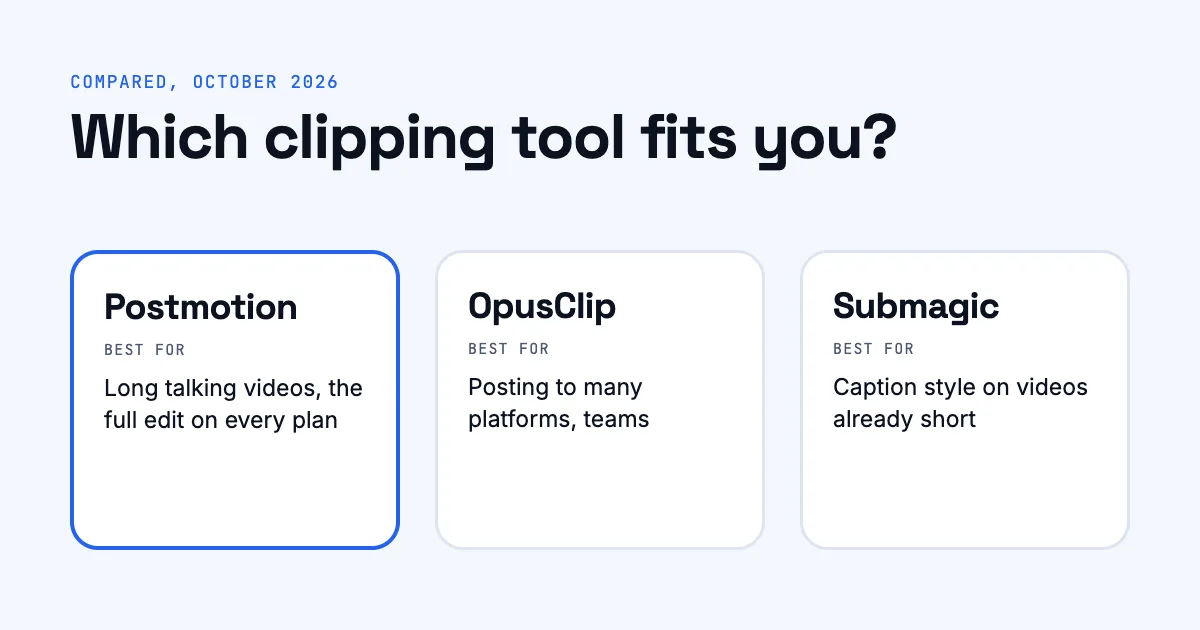
Postmotion was designed around this list. When you upload a talking video, it starts each short on a strong line and gives it a hook drawn from what's said; adds captions a few words at a time, each word lighting up as it's spoken, with the key word of each idea set apart and kept clear of the platforms' buttons; cuts in B-roll only after looking at the clip and checking it fits; pops up key numbers and phrases; punches in on new sentences; and lays music under the voice, dipping under every word. Then it checks layout, motion, and contrast before you see the short, and you can change anything for free. See how to turn a podcast into shorts for the full workflow.
Frequently asked questions
What is a good retention rate for a short?
It varies by niche and length, so compare your shorts with each other rather than with a universal number. Look at where the curve drops: a steep drop in the first two seconds means the hook needs work; a slow slide in the middle means pacing or visual change.
Do captions really increase watch time?
They help most viewers who watch without sound, and they help everyone follow fast or accented speech. Word-by-word highlighting adds rhythm, which also makes a clip feel faster.
How often should the picture change in a talking short?
A visual change every few seconds (a zoom, a B-roll cut, a pop-up, a reframe) keeps a talking head from feeling static. Each change should support what's being said.
Should I use trending music on talking shorts?
Only if it doesn't compete with the voice. In a talking short, the words are the content; music should sit quietly underneath them.